



When a mid-market brand scales its shipping volume, the financial team usually expects parcel expenses to flatten out or drop.
The business is hitting higher volume brackets with major carriers, which theoretically should provide stronger rate leverage. Yet, when looking at the monthly profit and loss statements, parcel spend as a percentage of revenue is frequently moving upward.
Your baseline assumption is that higher volume automatically grants better shipping efficiency. When parcel costs outpace growth, however, the root cause of rising costs is rarely limited to standard annual carrier rate increases. The erosion of margin typically stems from small operational variables, packaging decisions, and system configurations occurring on the warehouse floor long before a shipping label is even generated.
Table of Contents
- Packaging choices create artificial weight charges before the carrier receives the box.
- Multi-item orders turn into multiple shipments when inventory placement fails.
- Relying on a single national carrier network drives up regional parcel costs.
- Upfront fulfillment decisions impact final carrier pricing.
- Controlling parcel costs requires evaluating the operational process.
Packaging choices create artificial weight charges before the carrier receives the box.
Carrier contract negotiations tend to focus heavily on base zone rates and fuel surcharges. While those metrics are important, they lose their value if the physical packing execution inside the warehouse is unaligned with dimensional weight rules.
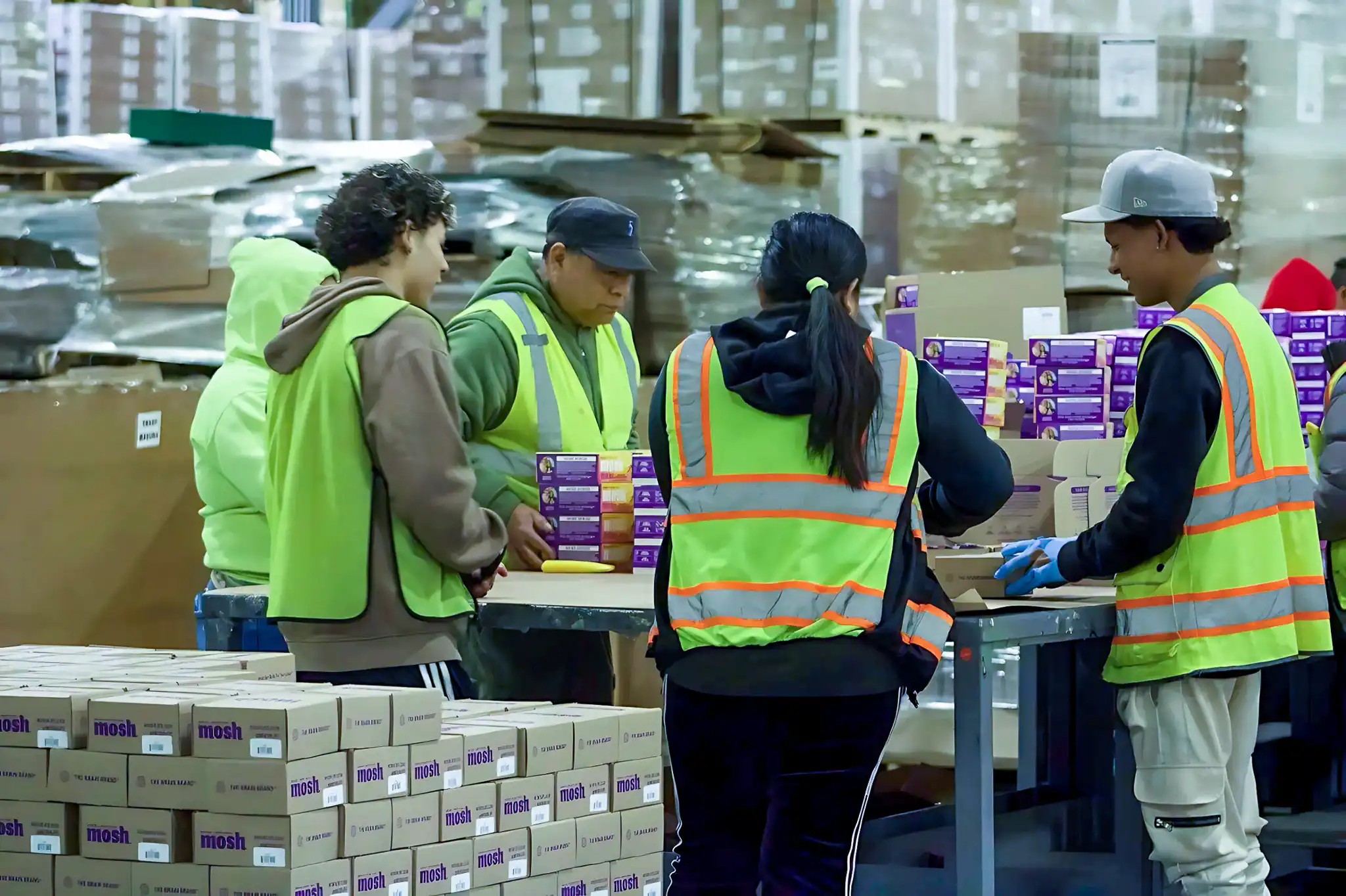
If the fulfillment workflow relies on manual packaging selection, warehouse personnel will naturally choose larger boxes to ensure items fit quickly. When an item is placed in a carton that contains unnecessary empty space, the carrier bills the shipment based on its dimensional footprint rather than its actual weight. At one thousand shipments a month, a variance of a few inches per package feels minor. When volume scales to twenty thousand or fifty thousand orders, paying to ship warehouse air creates a significant financial leak that quietly inflates the total cost per order.
Multi-item orders turn into multiple shipments when inventory placement fails.
Multi-channel expansion typically requires distributing inventory across different warehouse locations or distinct zones within a single facility to maintain speed. If your inventory management software lacks real-time accuracy, order allocation logic can easily break down.
A single customer order containing three items can easily turn into two or three separate outbound packages if the products are not positioned cleanly for a single pick path. Every time an order is split, you pay multiple base carrier fees, double handling charges, and extra packaging material expenses for a single transaction. The revenue from the sale stays fixed, but the parcel cost doubles, eliminating the margin efficiency expected from a larger order pool.
Relying on a single national carrier network drives up regional parcel costs.
Parcel expenses represent forty to sixty-eight percent of total fulfillment costs for most scaling brands. Despite this being the largest line item in the logistics budget, many growing operations remain tied to a single national carrier network out of habit or contract structure.
As shipping volume grows, relying exclusively on one carrier network limits your ability to adapt to regional delivery variables. A single national provider might have excellent pricing for close-proximity zones but become cost-prohibitive when shipping across the country or into residential areas. Without automated multi-carrier routing that evaluates the exact package weight, destination zone, and real-time carrier performance for every single shipment, you miss the cost-saving opportunities that come with regional carrier networks and shipping consolidators.
Upfront fulfillment decisions impact final carrier pricing.
The majority of mid-market brands choose to utilize 3PL-negotiated carrier rates to protect their gross margins. However, access to deep volume discounts only solves half the problem. A discounted rate structure cannot overcome poor data integrity at the point of order entry.
When address verification systems fail to flag missing apartment numbers, incorrect ZIP codes, or commercial addresses misclassified as residential, carriers apply steep correction fees directly to the final invoice. These surcharges are applied retroactively, meaning the finance team sees the margin erosion weeks after the product has reached the customer.
True parcel cost control requires resolving these delivery variables before the manifest is printed, ensuring that execution errors do not compromise contract savings.
Controlling parcel costs requires evaluating the operational process.
Managing shipping inflation requires looking past the carrier rate sheets and focusing on the internal fulfillment mechanics. Leadership teams must evaluate whether your packaging systems utilize intelligent cartonization software, how effectively the warehouse limits split shipments, and if the current tech stack automatically rate shops across multiple carrier options for every order.
When you align the physical packing process with carrier contract rules, you prevent volume from creating extra operational drag. Real parcel cost control is not achieved by constantly hunting for a cheaper shipping rate but by ensuring that every package leaves the facility in the most cost-efficient form possible.
When parcel costs rise alongside order volume, the issue is rarely a simple rate problem. The more effective step is to evaluate where the operational decisions inside the warehouse are making individual shipments heavier or larger than they need to be. Growth should allow you to pick up shipping leverage. When it does not, your shipping process is no longer structured to support the volume moving through the operation.
If you are seeing parcel costs cut into your margins as your order volume scales, schedule a discovery call to talk through your current setup and challenges. We can help you identify where processing inefficiencies are driving up your shipping spend.
At IDS Fulfillment, we deliver accurate, scalable fulfillment solutions that help mid-sized ecommerce and multi-channel brands succeed across the U.S. From omnichannel order fulfillment to returns processing, our experienced team combines flexible logistics systems with real-time visibility to protect your customer experience and support growth. Backed by decades of operational expertise and powered by DHL Supply Chain’s infrastructure, IDS helps businesses scale with confidence, control costs, and meet delivery expectations every time.